book
The Ancestor's Tale
First published 2004673 pages
A reverse pilgrimage through 4 billion years of evolution to the origin of life.
Why it’s worth your time
Richard Dawkins (with Yan Wong, who co-wrote the revised 2016 edition) tells the history of life backward, as a pilgrimage modeled on Chaucer's Canterbury Tales. Starting with modern humans, the pilgrims travel back in time, meeting at forty "rendezvous" points the ancestors they share with chimpanzees, then other primates, mammals, fish, plants, fungi and bacteria, all the way to the origin of life. At each rendezvous a creature tells a "tale" that illuminates some part of evolution.
It's Dawkins's most ambitious and generous popular book: a tour of the whole tree of life and the evidence for it, more celebration than polemic. It's long, and best dipped into rather than read straight through. Get the 2016 edition, which updates the science.
Where to start
- The opening sections on humankind
Recent human history and archaic humans, before the pilgrimage leaves our species.
- Rendezvous 1: Chimpanzees
Our closest relatives, and the ancestor we share with them.
- The Great Cretaceous Catastrophe
The asteroid that ended the dinosaurs, and its meaning for mammals.
- The Great Historic Rendezvous
The ancient merger that created complex cells — the most important event in the book.
About Richard Dawkins
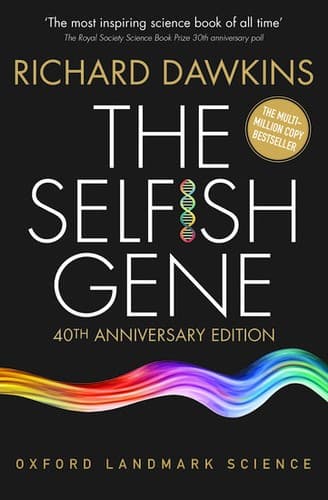
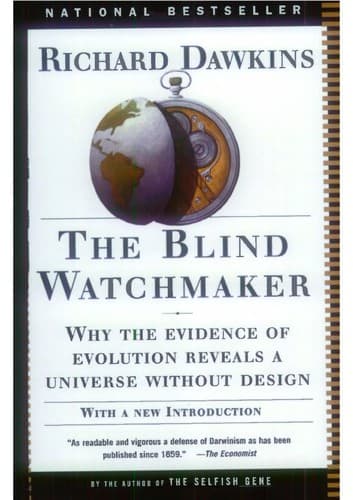
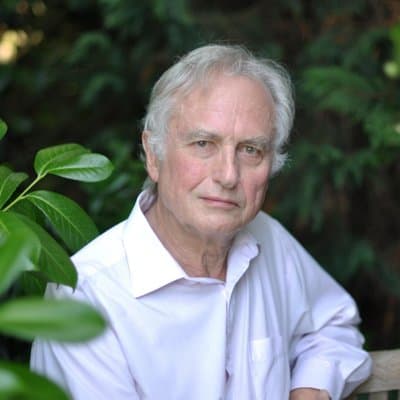
Richard Dawkins is a British evolutionary biologist and an emeritus fellow of New College, Oxford, who from 1995 to 2008 was the first Simonyi Professor for the Public Understanding of Science. His books include The Selfish Gene (1976), The Blind Watchmaker (1986) and The God Delusion (2006).
Everything by Richard Dawkins