book
The Selfish Gene
First published 1976352 pages
The gene-centered view of evolution that redefined natural selection.
Why it’s worth your time
Richard Dawkins's first book, from 1976, popularized the gene's-eye view of evolution worked out by George Williams, W. D. Hamilton and others: bodies are "survival machines" built by genes, and behavior that looks altruistic — parents sacrificing for children, animals warning their kin — makes sense once you ask what it does for the genes involved. John Maynard Smith said that although it was written for a popular audience it made an original contribution to biology.
The title has been misread ever since. "Selfish" describes how genes are copied, not how people behave, and Dawkins later conceded his editor's suggestion, The Immortal Gene, might have been wiser. The final chapter of the original coined the word "meme." Get the second edition (1989) or later, which adds two chapters and long endnotes in which Dawkins answers his critics.
Where to start
- Chapter 2: The Replicators
Life before bodies: the origin of self-copying molecules, told as a story. The foundation for everything after.
- Chapter 11: Memes: The New Replicators
The original last chapter, where the word "meme" was born. Short and speculative.
- Chapter 12: Nice Guys Finish First
Added in 1989: game theory and the evolution of cooperation. The best answer to anyone who reads the title literally.
- The Extended Phenotype
The technical sequel, written for biologists, which Dawkins considers his principal contribution to evolutionary theory.
About Richard Dawkins
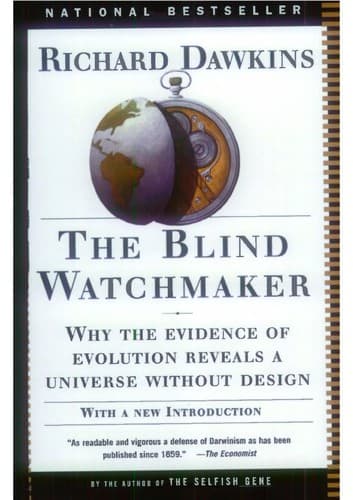
Richard Dawkins is a British evolutionary biologist and an emeritus fellow of New College, Oxford, who from 1995 to 2008 was the first Simonyi Professor for the Public Understanding of Science. His books include The Selfish Gene (1976), The Blind Watchmaker (1986) and The God Delusion (2006).
Everything by Richard Dawkins