WEEKLY DISPATCH
Antimatter and the Speed of Light
Monday, March 30, 2026
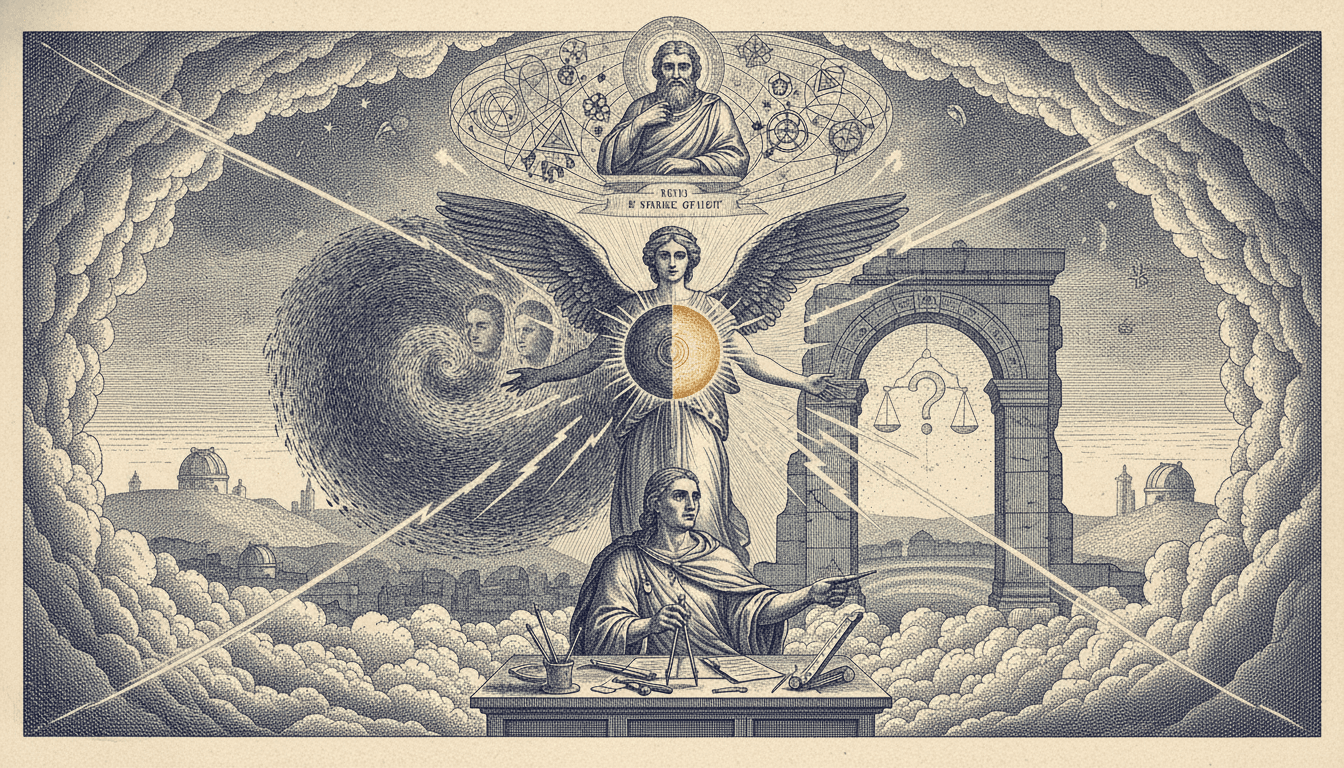
Two physics videos this week that tell very different stories about the same question: what happens when theory runs ahead of experiment?
The accidental discovery
Veritasium's The Man Who Accidentally Discovered Antimatter tells the story of Paul Dirac's equation — a mathematical prediction that demanded the existence of an "anti-electron" before anyone had observed one. Derek Muller traces the path from Dirac's purely theoretical insight to Carl Anderson's cloud chamber photograph that confirmed it. The video makes a subtle point that most science communication misses: Dirac didn't set out to predict antimatter. He was trying to reconcile quantum mechanics with special relativity, and the math forced his hand. Discovery sometimes works backward — the equation knows something before the physicist does.
Can we test it?
PBS Space Time's Can We Test Quantum Gravity? tackles the field's biggest frustration: the energy scales where quantum gravity effects become significant are impossibly far beyond what any collider can reach. But the episode focuses on a genuinely exciting development — proposed experiments that could be done on a lab bench rather than a galaxy-sized accelerator. The ideas involve entangling macroscopic objects and checking whether gravity respects quantum superposition. If it does, general relativity needs updating. If it doesn't, quantum mechanics does. Either way, the experiment would be historic.
On being serious
Adam Mastroianni's Surely You Can Be Serious isn't about physics, but it landed in the same week and it connects. The post argues that genuinely caring about something — refusing to hedge, refusing to treat your values as negotiable — is essential for meaningful work. Mastroianni's point applies directly to the scientists in the physics videos: Dirac took his equation seriously enough to predict something nobody had seen. The quantum gravity experimentalists take the problem seriously enough to propose tests most physicists think are premature. The alternative — waiting for conditions to be perfect — is a recipe for never starting.
The thread
An equation that predicted antimatter, an experiment that might test quantum gravity, and an essay on why you should take your own commitments seriously. The common thread: the most consequential work comes from people who follow their logic to uncomfortable conclusions rather than stopping where the consensus says to stop.