book
The Information: A History, a Theory, a Flood
by James Gleick
First published 2011526 pages
How information became the defining concept of our age — drums to the internet.
Why it’s worth your time
James Gleick's 2011 history of information starts with African talking drums and runs through the alphabet, the first dictionaries, Charles Babbage, the telegraph and the telephone to its hero, Claude Shannon, whose 1948 information theory turned "information" into something you could measure. From there it follows the idea into physics, genetics, randomness and quantum computing, and ends with our flood of data.
It's ambitious and beautifully written, with Gleick's gift for character sketches, and it makes a demanding idea — that information is physical and measurable, separate from meaning — feel thrilling. The middle chapters on Shannon are the heart; the final ones on the internet age are the thinnest.
Where to start
- Chapter 1: Drums That Talk
How talking drums carried messages between villages, and what their redundancy teaches about information. A perfect opening.
- Chapter 4: To Throw the Powers of Thought into Wheel-Work
Charles Babbage, Ada Lovelace and the engines that anticipated the computer.
- Chapter 7: Information Theory
Claude Shannon's breakthrough, explained without equations. The book's center of gravity.
- Chapter 9: Entropy and Its Demons
Maxwell's demon and the deep link between information and thermodynamics.
About James Gleick
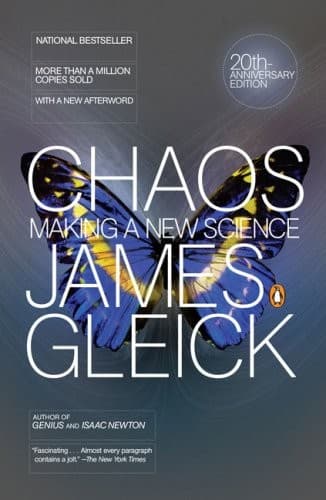
James Gleick is an American author and historian of science. His books include Chaos (1987) and The Information (2011); three of them have been finalists for the Pulitzer Prize and the National Book Award.
Everything by James Gleick