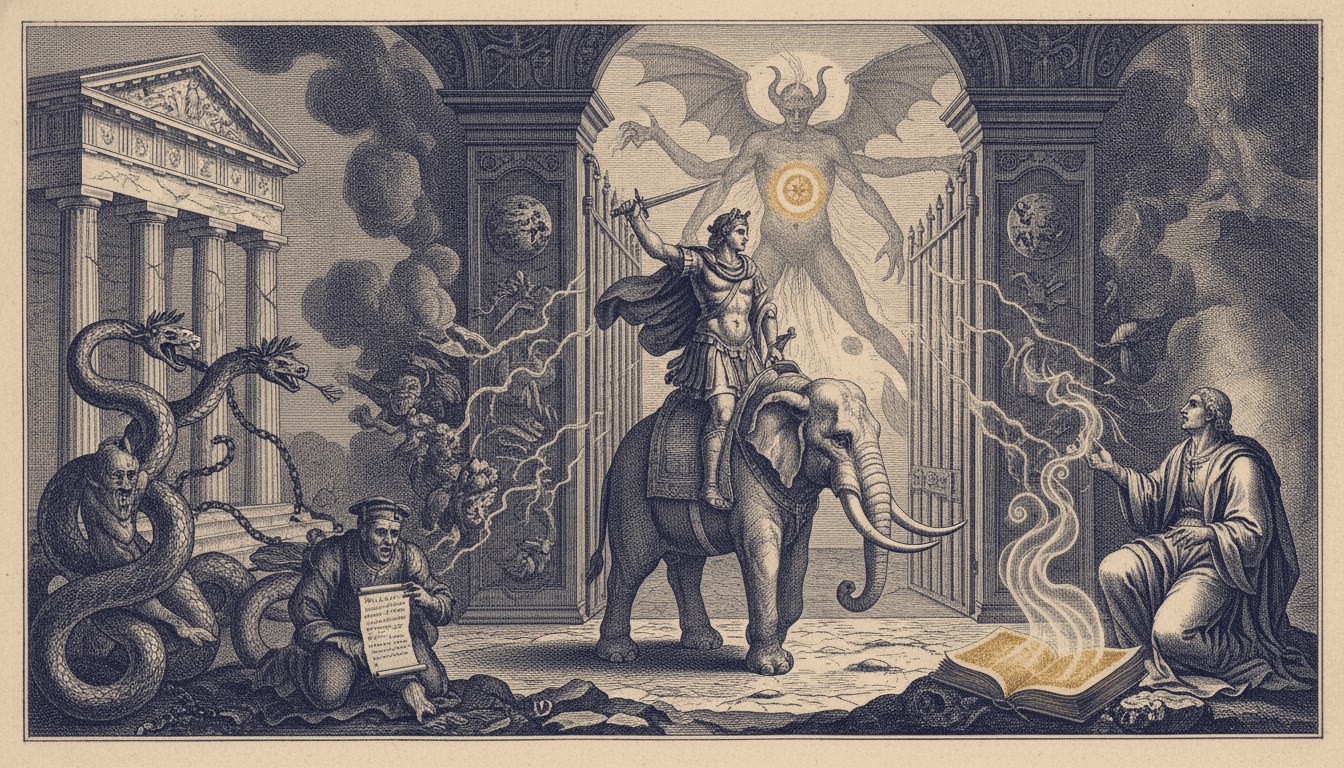
book
The Demon-Haunted World
by Carl Sagan
First published 1995472 pages
Science as a candle in the dark — skepticism, wonder, and critical thinking.
Why it’s worth your time
The last book Carl Sagan published before his death in 1996 is a defense of science as a way of thinking, not just a body of facts. He takes on alien abductions, faith healing, witch hunts and other delusions, explains how to tell good evidence from bad, and argues that a democracy whose citizens can't evaluate claims is in danger. Four of its chapters were written with his wife, Ann Druyan.
It's warm rather than sneering, honest about the human need for wonder, and its tools for skeptical thinking are as useful now as when it was written. Some reviewers found it long and repetitive, and parts on specific 1990s fads have dated, but its central argument — that science is a candle in the dark — has only grown more relevant.
Where to start
- The dragon in the garage
Sagan's parable of an invisible, untestable dragon: why claims that can't be tested mean nothing.
- The "baloney detection kit"
Sagan's toolkit for spotting bad arguments and fallacies. The most famous part of the book.
- The chapters on witch hunts and demons
How the same habits of mind behind past persecutions show up in modern panics.
About Carl Sagan
Carl Sagan (1934–1996) was an American astronomer, planetary scientist and science communicator at Cornell. He worked on NASA's Mariner, Viking and Voyager missions, co-wrote and narrated the television series Cosmos (1980), and won the Pulitzer Prize for The Dragons of Eden.
Everything by Carl Sagan