video
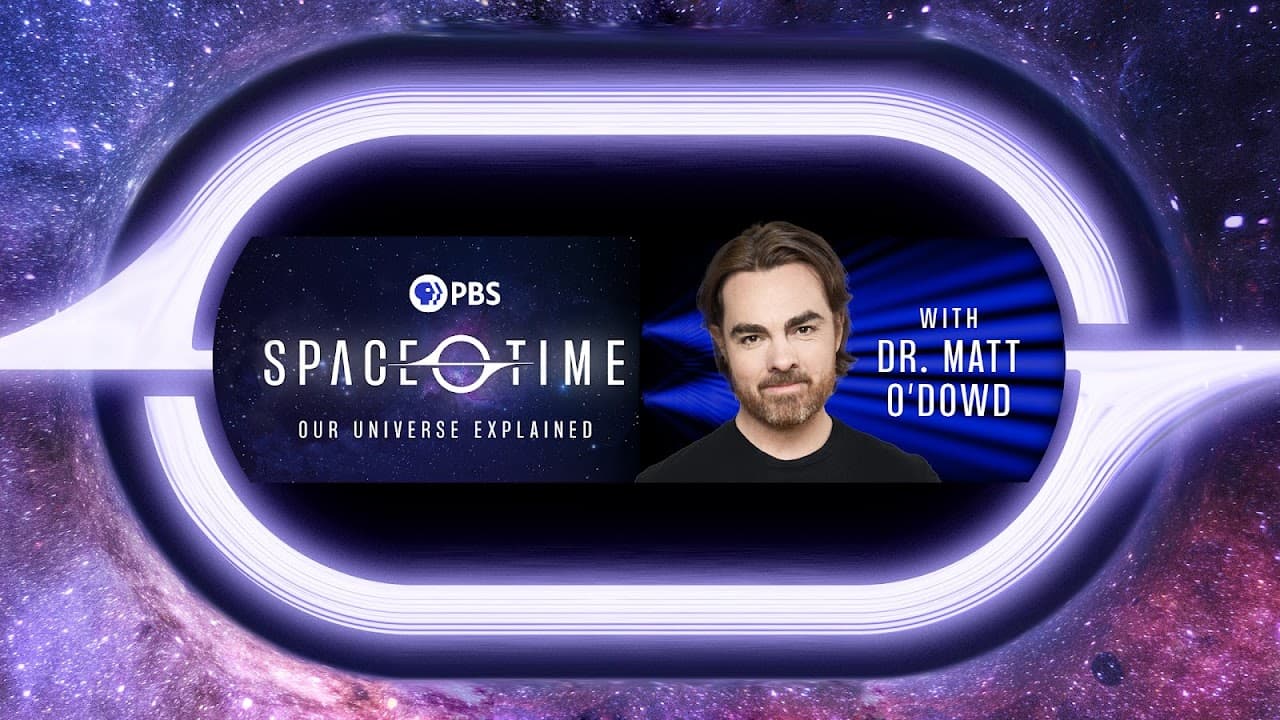
PBS Space Time
Deep dives into astrophysics, quantum mechanics, and the fundamental nature of reality — rigorous but accessible.
Why it’s worth your time
PBS Space Time, launched by PBS Digital Studios in 2015 and hosted since that September by Matt O'Dowd, an astrophysicist at Lehman College in New York, explains modern physics without dumbing it down: relativity, quantum mechanics and quantum field theory, black holes, cosmology, dark matter and energy, and the latest results from telescopes such as JWST. Episodes build on one another, and use the real concepts and occasionally the equations.
It's the most demanding physics channel on YouTube, and the most rewarding. Expect to rewatch: the pace is quick and the ideas are hard. Recent titles lean on "may have" hooks about new results, and some episodes now run past two hours, but the explanations remain careful.
Where to start
- The Speed of Light is NOT About Light
A 2015 classic on what c really is.
- The Real Meaning of E=mc²
Mass as a form of energy, from the channel's first year.
- So You Want to Understand Quantum Mechanics…
A two-hour 2026 course in one video.
- PBS Space Time: Quantum Entanglement
The Bohr–Einstein debate, one of its best episodes.
About PBS Space Time
PBS Space Time is a physics series from PBS Digital Studios, launched in 2015 with host Gabe Perez-Giz and hosted since September 2015 by Matt O'Dowd, an Australian astrophysicist at Lehman College, City University of New York.
Everything by PBS Space TimeAbout this channel
Space Time explores the outer reaches of space, the craziness of astrophysics, the possibilities of sci-fi, and anything else you can think of beyond Planet Earth with our astrophysicist host: Matthew O’Dowd. For all business inquiries and sponsorship opportunities please reach out to: pbsspacetime@lighthouseagents.com Matt O'Dowd spends his time studying the universe, especially really far-away things like quasars, super-massive black holes, and evolving galaxies. He uses telescopes in space to do it. Matt completed his Ph.D. at NASA's Space Telescope Science Institute, followed by work at the University of Melbourne and Columbia University. He's now a professor at the City University of New York's Lehman College and an Associate at the American Museum of Natural History's Hayden Planetarium. Previous host Gabe Perez-Giz is an astrophysicist who studies black hole physics. He received his Ph.D. from Columbia University and also hosted PBS Infinite Series.