video
Numberphile: The Riemann Hypothesis
by Various Mathematicians
The greatest unsolved problem in mathematics explained by working researchers.
Why it’s worth your time
Edward Frenkel, a mathematician at the University of California, Berkeley, explains the Riemann hypothesis, one of the seven Millennium Prize Problems the Clay Mathematics Institute set in 2000, each worth a million dollars. He builds it from scratch: the zeta function, Euler's surprising answer to the Basel problem, complex numbers, and Riemann's 1859 idea of extending the function across the whole complex plane. The hypothesis says that all of its non-trivial zeros lie on a single line, and if it's true, it tells us how the prime numbers are distributed.
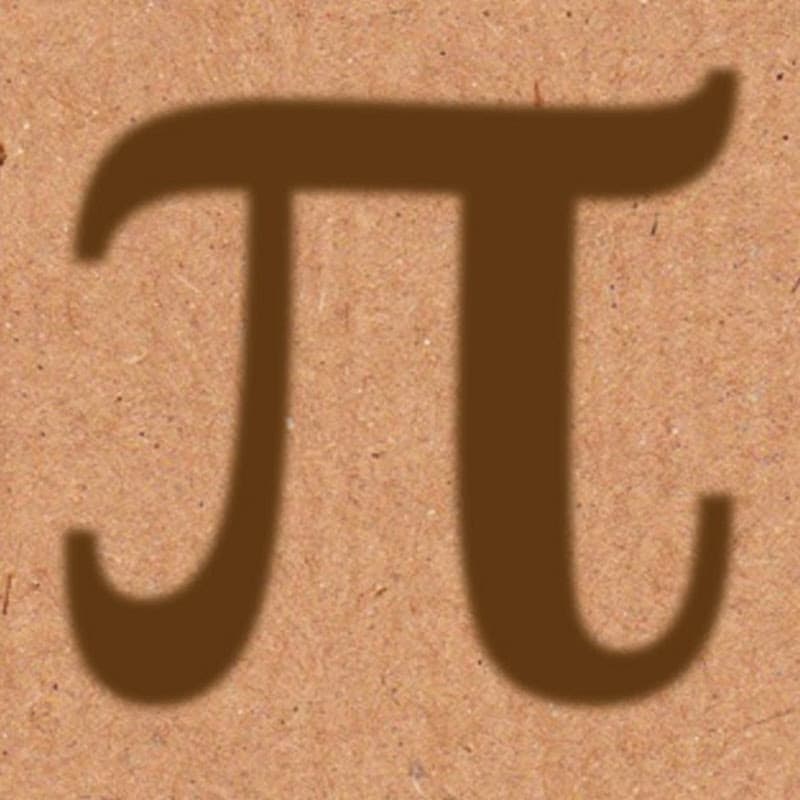
It's a model of what Numberphile does well, with Brady Haran asking the questions a viewer would ask. It also gives the honest account of the channel's well-known claim that 1 + 2 + 3 + ... = −1/12: the value comes from extending the zeta function, not from adding the numbers up. One slip is corrected in the description: at 7:20, ζ(2) should be π²/6.
Where to start
- Riemann Hypothesis - Numberphile
The video itself.
- Primes are like Weeds (PNT) - Numberphile
James Grime on the prime number theorem, the result the Riemann hypothesis would sharpen.
- But what is the Riemann zeta function? Visualizing analytic continuation
3Blue1Brown's animated explanation of the step Frenkel describes in words.
- The Numberphile Podcast
Brady Haran's long interviews with mathematicians.
About this channel
Videos about numbers and mathematics. Videos by Brady Haran since 2011. Our thanks to Jane Street and our Patreon supporters.