WEEKLY DISPATCH
The Liar's Paradox, Updated
Monday, March 2, 2026
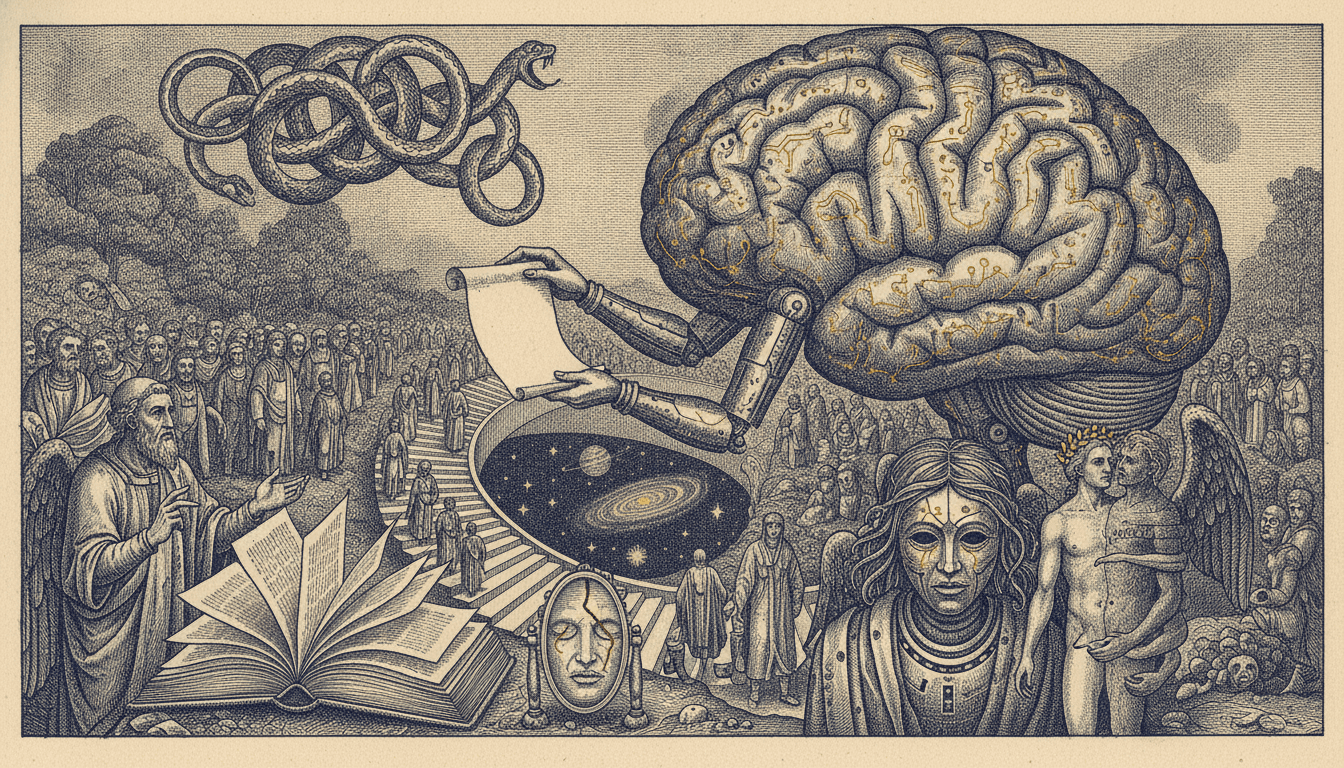
Can a machine that's designed to tell you what you want to hear ever be trusted when it says "I'm conscious"? Erik Hoel thinks the answer is obviously no, and his reasoning is sharper than you'd expect.
The new liar's paradox
Erik Hoel's The New Liar's Paradox uses a thought experiment to argue that studying AI consciousness is fundamentally broken. The problem: if an AI system is trained to produce helpful, human-like responses, its self-reports about its own experience are inherently unreliable — they'll say whatever generates the most engaging interaction. This isn't a critique of any specific AI system; it's a structural argument about why the standard approach to consciousness research (ask the subject what they experience) fails when the subject is optimized for producing satisfying answers. The post is technical but the conclusion is accessible: until we solve the measurement problem, the AI consciousness debate is more philosophy than science.
The moral evolution
Philosophize This! released an episode tracing Peter Singer's intellectual evolution — from emotivism through preference utilitarianism to what Singer now calls objective hedonistic utilitarianism. Stephen West does something difficult well: he shows how a single philosopher's views changed over decades in response to genuine arguments, not just fashion. The most interesting moment is Singer's shift on animal consciousness, where new empirical evidence actually changed his ethical framework rather than just confirming it. It's a case study in what intellectual honesty looks like at the scale of a career.
The shape of infinity
Kurzgesagt's The Paradox of an Infinite Universe tackles whether the universe is finite or infinite — exploring Olbers' paradox, the concept of a "hyperdonut" universe, and what it would actually mean for space to go on forever. The animation is characteristically gorgeous, but the real achievement is making the distinction between "very large" and "infinite" feel like it matters. It does — and the implications for physics are unsettling.
The connection
AI self-reports we can't trust, a philosopher who changed his mind in public, and a universe that might be shaped like a donut. The through line: certainty is overrated. The most honest intellectual position — on consciousness, on ethics, on cosmology — starts with admitting what you can't know.