book
Homo Deus
First published 2015464 pages
What happens when humanity conquers famine, plague, and war? The future of our species.
Why it’s worth your time
Yuval Noah Harari's sequel to Sapiens begins with a bold claim: for the first time, famine, plague and war have become manageable problems, so humanity will turn to new goals — immortality, bliss and godlike power over life. That leads to his real subject: humanism, the faith in human feelings and choices that underpins modern life, may be undermined by biotechnology and by algorithms that know us better than we know ourselves, giving way to a new creed he calls dataism.
It's as fluent and provocative as Sapiens, and its account of the 2010s faith in data now reads as prescient in places. It's also speculative to a fault: The Economist called it glib, full of sweeping generalizations, and it tends to name-drop technologies rather than engage with them. Read it as a set of thought experiments about the future, not predictions.
Where to start
- Chapter 1: The New Human Agenda
Famine, plague and war tamed, and what comes next. The book's thesis.
- Chapter 7: The Humanist Revolution
How modern people came to treat their own feelings as the ultimate source of meaning.
- Chapter 9: The Great Decoupling
Intelligence decoupling from consciousness, and what that means for the value of human beings.
- Chapter 11: The Data Religion
Dataism: the creed Harari thinks may replace humanism.
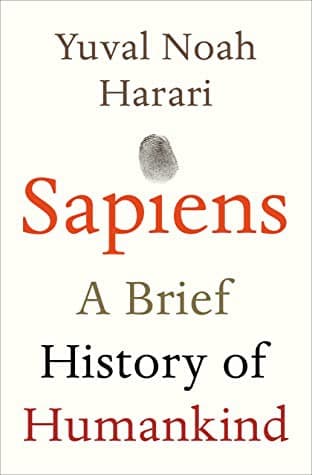
- Sapiens
The book this one follows.
About Yuval Noah Harari
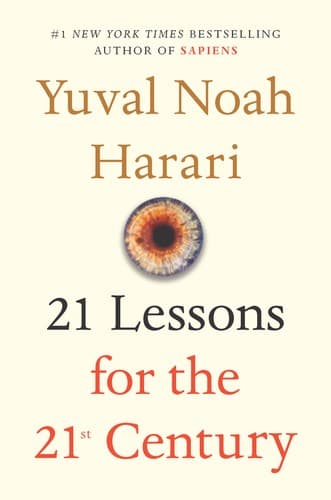
Yuval Noah Harari is an Israeli historian and professor at the Hebrew University of Jerusalem. After Sapiens he wrote the bestsellers Homo Deus (2016), 21 Lessons for the 21st Century (2018) and Nexus (2024).
Everything by Yuval Noah Harari