book
Consciousness Explained
First published 1991512 pages
A bold materialist account arguing consciousness is not what it seems.
Why it’s worth your time
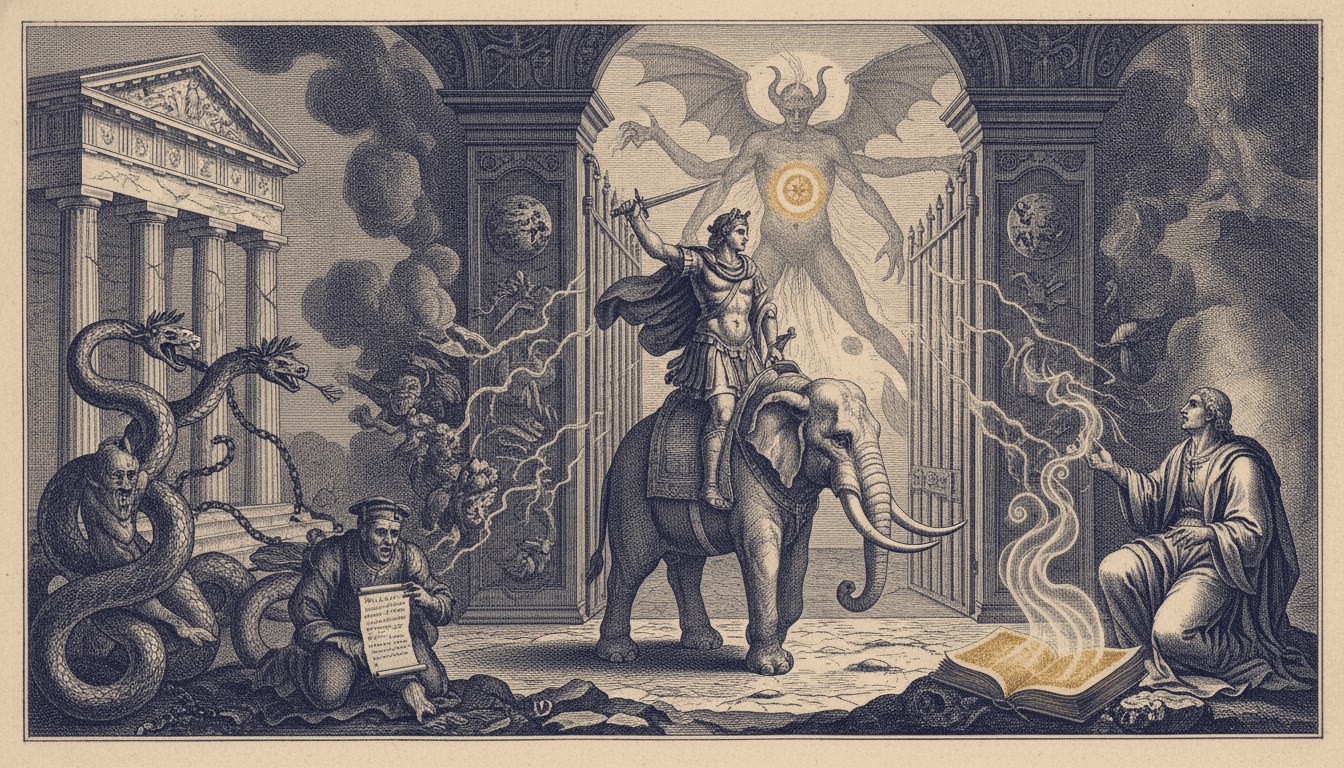
Daniel Dennett's 1991 book attacks the picture almost everyone carries around: that somewhere in the brain there's a "Cartesian theater" where experience comes together and is watched by a self. In its place he proposes the "multiple drafts" model — many parallel processes in the brain, editing and revising, with no single finish line where things become conscious — and argues that qualia, the supposedly private, ineffable feels of experience, are a philosophers' confusion.
It's witty, full of experiments and thought experiments, and was named one of the New York Times's best books of its year. Critics say it doesn't explain consciousness so much as explain it away: David Chalmers and John Searle both argued that Dennett simply denies the thing that needs explaining. Whichever side you take, it's the strongest case for the deflationary view, and you'll come away doubting intuitions you didn't know you had.
Where to start
- Chapter 1: Prelude: How Are Hallucinations Possible?
A playful opening that sets up the whole problem.
- Chapter 5: Multiple Drafts Versus the Cartesian Theater
The central theory, with the experiments on timing and perception behind it.
- Chapter 12: Qualia Disqualified
The most controversial chapter, and the one critics argue with.
- Chapter 13: The Reality of Selves
The self as a "center of narrative gravity": real, useful, and not a thing inside your head.
About Daniel Dennett
Daniel Dennett (1942–2024) was an American philosopher and cognitive scientist who taught at Tufts University, where he co-directed the Center for Cognitive Studies. His books include Consciousness Explained (1991) and Darwin's Dangerous Idea (1995).
Everything by Daniel Dennett