book
Complexity: The Emerging Science at the Edge of Order and Chaos
First published 1992380 pages
The birth of complexity science at the Santa Fe Institute.
Why it’s worth your time
M. Mitchell Waldrop's 1992 book tells the story of the Santa Fe Institute, founded in the 1980s by scientists who believed that economies, ecosystems, immune systems and minds share deep principles as complex adaptive systems. It follows the people: the economist Brian Arthur and his heretical idea of increasing returns, John Holland and his genetic algorithms, Christopher Langton and artificial life, Stuart Kauffman and self-organization.
It's a lively, character-driven account of a scientific movement in its exciting early days, and the best introduction to the ideas behind complexity science. It's also an origin story written from inside, so it's more enthusiastic than critical, and some of its grandest hopes for a unified theory of complexity haven't been fulfilled.
Where to start
- The opening chapters on Brian Arthur
An economist's argument that markets can lock in winners by chance, and the hostility it met.
- The chapters on John Holland
Genetic algorithms and adaptive agents: how simple rules produce learning.
- The chapters on Christopher Langton and artificial life
Life at the edge of chaos, and the attempt to create it in a computer.
- Scale
Geoffrey West's later book from the Santa Fe Institute, on the laws of growth.
About M. Mitchell Waldrop
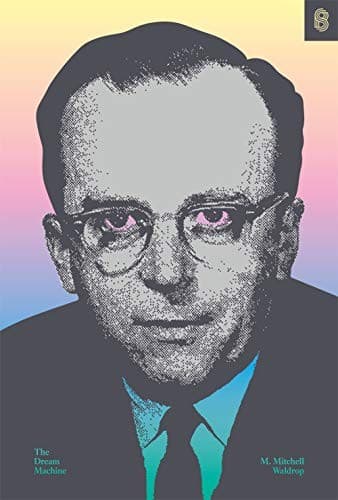
M. Mitchell Waldrop is an American science writer whose books include Complexity, about the Santa Fe Institute, and The Dream Machine, about J. C. R. Licklider and the origins of personal computing.
Everything by M. Mitchell Waldrop