WEEKLY DISPATCH
Your Data Will Be Used Against You
Monday, March 16, 2026
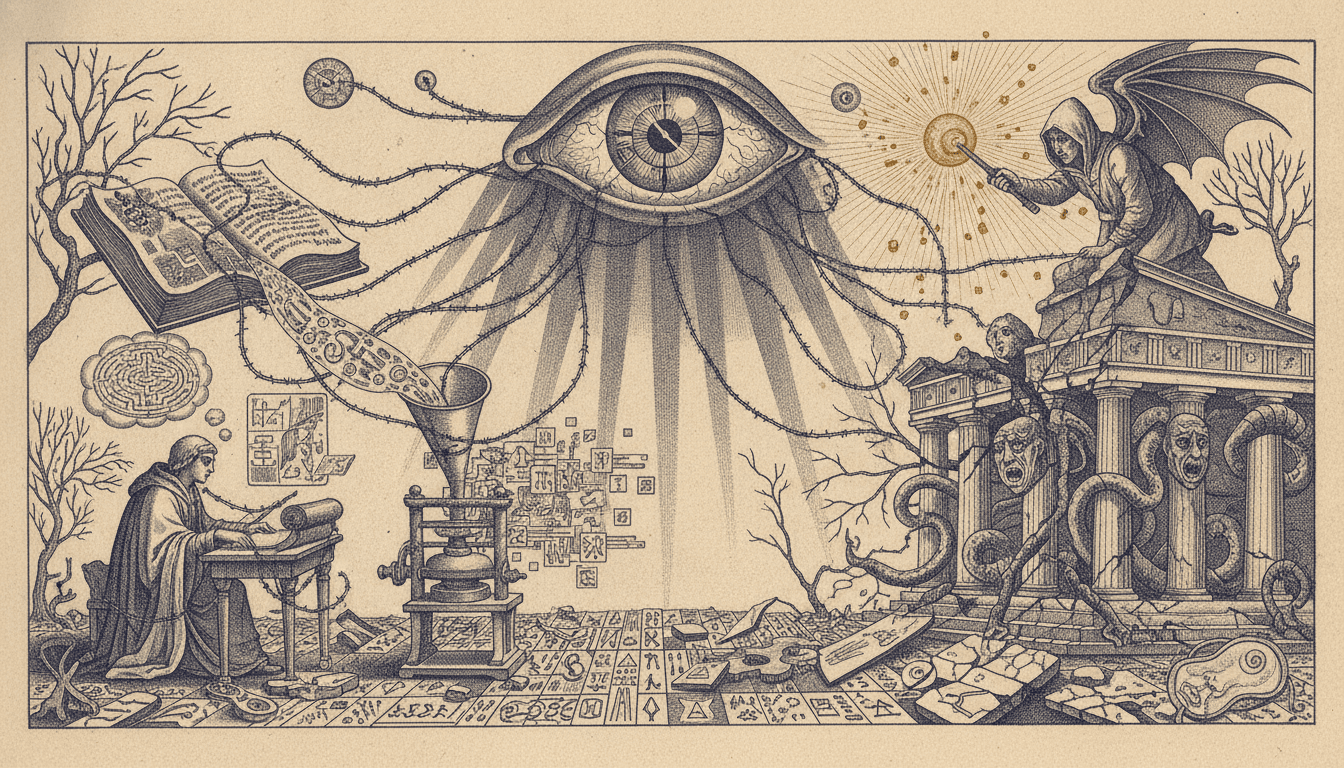
How much of your life is being recorded, and who gets to search it? One podcast episode this week made the answer feel urgent.
The panopticon in your pocket
Sean Carroll's Mindscape episode with Andrew Guthrie Ferguson lays out the surveillance landscape with uncomfortable precision. Ferguson, a law professor, explains how smart devices create what he calls a modern Panopticon — your phone, your car, your doorbell, your watch, all generating data about your location, habits, and contacts. The critical point: this data is currently available to law enforcement with minimal oversight. The conversation avoids both techno-paranoia and complacency, landing on the genuinely difficult question of how to balance security and privacy when the data simply exists.
Gwern on writing
Gwern gave a rare interview to Adam Mastroianni at the Inkhaven writing residency — and it's fascinating for anyone who's wondered how one pseudonymous person produces such exhaustively researched work. The key reveal: Gwern spends 99% of his time reading, not writing. His "pipeline model" argues that small compound advantages in how you consume information produce large differences in output quality. The section on why he generates ideas through "pathological cross-domain reading" — deliberately reading far outside his expertise — explains a lot about why Gwern.net feels different from everything else on the internet.
Fear as a political weapon
Philosophize This! released an episode on Martha Nussbaum's argument that fear is toxic to democracy. Stephen West traces Nussbaum's case that the very attitude people claim to oppose — fear of political opponents — is the force actually destroying democracy's ability to function. The episode is pointed without being partisan: Nussbaum's framework applies equally to every political faction that defines itself primarily by what it's afraid of.
The connection
Surveillance data, pathological reading habits, and political fear — three very different subjects that converge on the same question: what information do you actually need, and what information is using you? Ferguson's data panopticon, Gwern's reading pipeline, and Nussbaum's fear analysis are all, at bottom, about the relationship between attention and power.