book
Crime and Punishment
First published 1866520 pages
Can a superior man transcend morality? Raskolnikov's crime and its psychological aftermath.
Why it’s worth your time
Raskolnikov, a poor former law student in St. Petersburg, persuades himself that an extraordinary person may step over moral law for a greater good, and murders an old pawnbroker to prove it. The rest of the novel, serialized through 1866, follows what the crime does to him: fever, guilt, a cat-and-mouse game with the investigator Porfiry Petrovich, and his relationship with Sonya, a young woman forced into prostitution to support her family.
It's the most accessible of Dostoevsky's great novels — a psychological thriller as much as a philosophical one — and a good place to start with him. The murder comes early and the suspense never lets up. Constance Garnett's free translation is serviceable; modern ones are livelier.
Where to start
- Part I
The build-up to the murder and the crime itself. As gripping as any thriller.
- Part III
Raskolnikov's article on "extraordinary" people who may break the law, and his first duel of words with Porfiry.
- Part IV
Sonya reads Raskolnikov the story of Lazarus. The novel's spiritual turning point.
- The free Project Gutenberg text
Constance Garnett's translation, free.
About Fyodor Dostoevsky
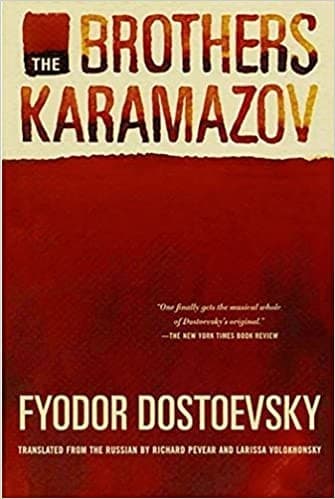
Fyodor Dostoevsky (1821–1881) was a Russian novelist regarded as one of the greatest in world literature. Arrested in 1849 for his part in a radical literary circle, he spent four years in a Siberian labor camp; his novels include Crime and Punishment, The Idiot, Demons and The Brothers Karamazov.
Everything by Fyodor Dostoevsky