WEEKLY DISPATCH
Predictions, Productivity, and Pi
Monday, January 5, 2026
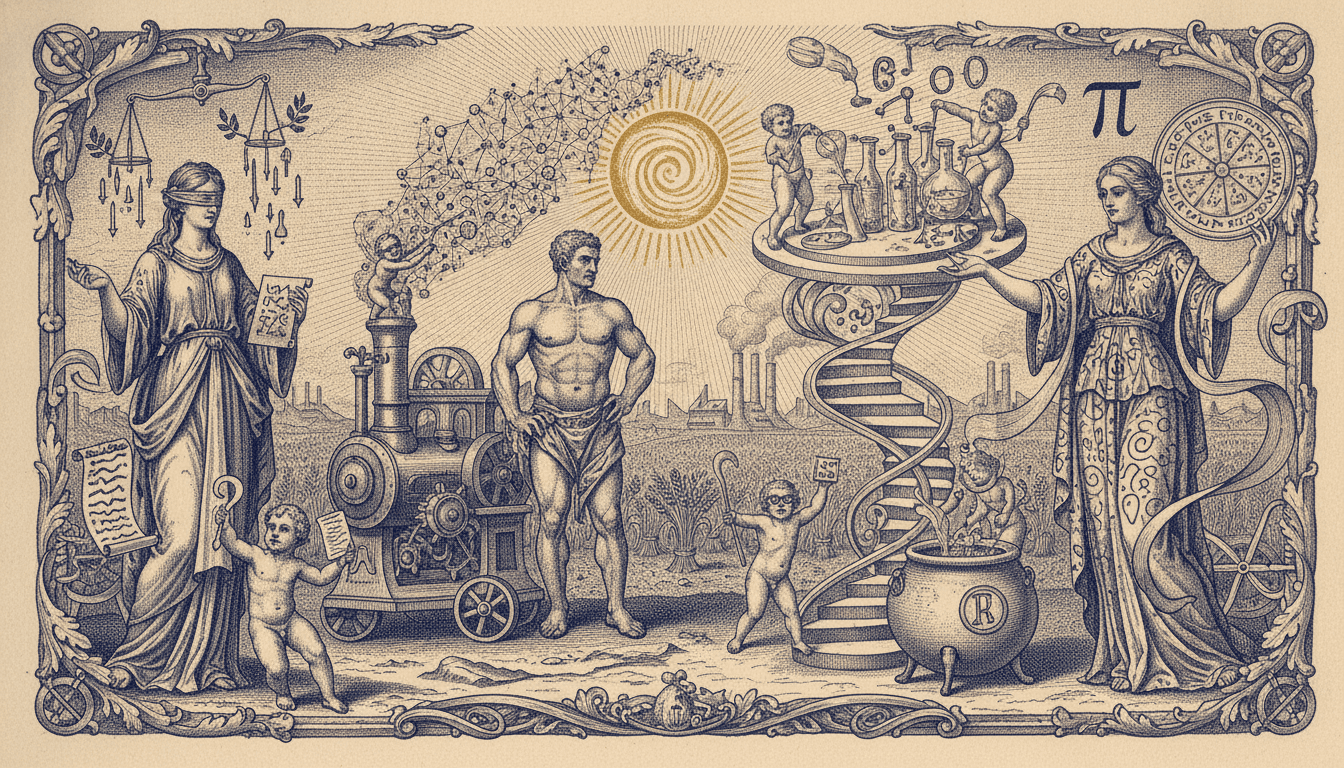
The first week of the new year is for looking back and looking forward. Three pieces did both unusually well.
Grading the crystal ball
Matt Yglesias published his Predictions for 2025, which starts by grading his 2024 predictions — and he's ruthlessly honest about what he got wrong. The exercise itself is the point: making explicit predictions and publicly reviewing them is a discipline that forces intellectual honesty. Most pundits simply move on and hope nobody checks. Yglesias puts the receipts on the table. His hit rate lands around 70%, which he argues is about right — if you're never wrong, you're not making interesting predictions.
The productivity question
Tyler Cowen flagged research on Marginal Revolution arguing that AI is showing up in the productivity statistics — a claim that directly challenges the conventional wisdom. The data suggests software and R&D investments are driving roughly half of recent productivity growth, with AI contributing a measurable ~1 percentage point annual boost. Whether this holds up under scrutiny is an open question, but the fact that we're moving from "AI will eventually boost productivity" to "here are the numbers" marks a shift in the conversation.
Noah Smith's take on what AI actually does adds a useful complication: both AI boosters and critics assume the technology primarily replaces workers, when it might be better understood as a complement that requires entirely new business models. The framing matters because it changes which policies make sense.
The accidental discovery
Numberphile posted a video on a new formula for pi that two physicists stumbled onto while doing string theory research. They weren't looking for a new way to calculate pi — nobody was — but the formula fell out of their equations. The video is a lovely reminder that mathematical discovery often works sideways: you aim at one problem and accidentally solve a completely different one.
The thread
Predictions, productivity metrics, and pi formulas have nothing obvious in common — except that each one is about the gap between what we expect to find and what's actually there. The most interesting intellectual work starts with that gap.