book
Thus Spoke Zarathustra
First published 1883354 pages
The Übermensch and eternal recurrence — philosophy as prophetic literature.
Why it’s worth your time
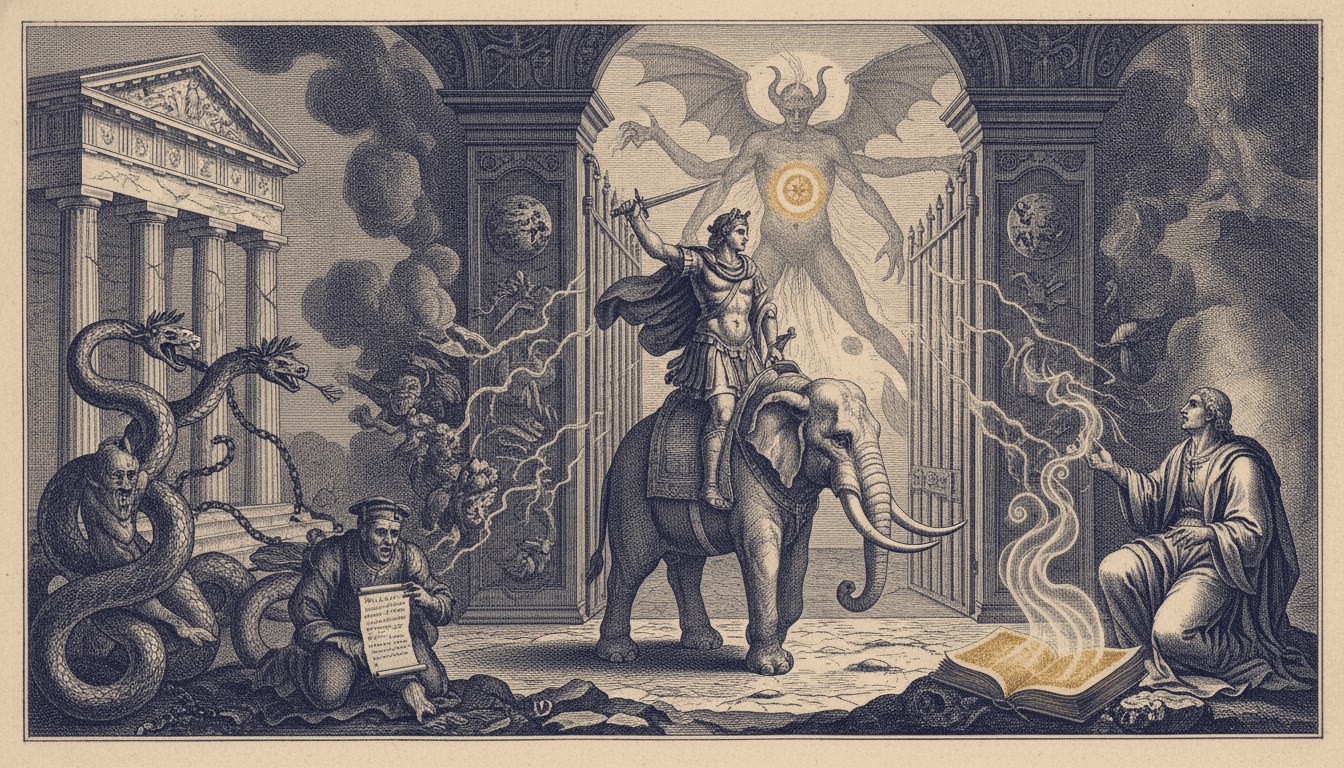
Nietzsche's strangest and most famous book is philosophy written as scripture: a prophet named after the Persian Zoroaster comes down from his mountain to teach that God is dead, that humanity is something to be overcome by the Übermensch, and — the idea Nietzsche called its central one — that we should live so as to will the eternal recurrence of every moment of our lives. Written in four parts between 1883 and 1885, it's full of parables, songs and speeches, and it's often parody as much as prophecy.
It's the wrong place to start with Nietzsche if you want arguments — Beyond Good and Evil and On the Genealogy of Morality are clearer — but the right place if you want his voice. Translation matters: the free Thomas Common version is all biblical "thou"s; Walter Kaufmann's, R. J. Hollingdale's and Adrian del Caro's are modern alternatives.
Where to start
- Zarathustra's Prologue
The death of God, the Übermensch and the "last men" who think they have discovered happiness — all in the first pages.
- "The Three Metamorphoses"
The spirit as camel, lion and child. The first of Zarathustra's speeches and the easiest to remember.
- "The Vision and the Enigma"
Eternal recurrence, presented as a vision at a gateway where two infinite paths meet.
- "The Convalescent"
Zarathustra wrestles with the thought of recurrence and recovers. The book's emotional climax.
- The free Project Gutenberg text
Thomas Common's 1909 translation, free. Archaic but complete.
About Friedrich Nietzsche
Friedrich Nietzsche (1844–1900) was a German philosopher who became a professor of classical philology at Basel at 24 and later lived as an independent writer. He suffered a collapse in 1889 and never recovered; afterward his sister Elisabeth edited his work, and her editions associated it with fascism and Nazism.
Everything by Friedrich Nietzsche