book
Human Compatible
First published 2019349 pages
Why creating superintelligent AI could be our last invention — and how to make it safe.
Why it’s worth your time
Stuart Russell, a Berkeley computer scientist and co-author of the field's standard textbook, argues that the way AI has been built — machines optimizing objectives we give them — is fundamentally unsafe, because we can never specify those objectives perfectly, and a capable enough system will pursue a flawed one to disaster. His alternative is machines that are uncertain about what humans want and learn our preferences by watching what we do, so they defer to us rather than resisting correction.
Published in 2019, it's the clearest case for AI risk from someone at the very center of the field, and it's witty as well as rigorous. Critics, including Melanie Mitchell, doubted that superintelligence is coming at all or that a truly intelligent machine would lack common sense. The technical appendices are optional; the argument is in the main chapters.
Where to start
- Chapter 1: If We Succeed
What happens if AI researchers actually achieve their goal? The question the field long avoided.
- Chapter 5: Overly Intelligent AI
The "King Midas problem" of machines that pursue the wrong objective too well.
- Chapter 6: The Not-So-Great AI Debate
Russell's replies to the usual reasons for not worrying.
- Chapter 7: AI: A Different Approach
The three principles for beneficial machines. The heart of the book.
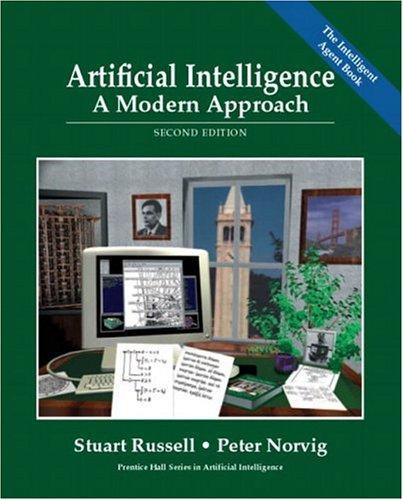
- Artificial Intelligence: A Modern Approach
Russell's textbook with Peter Norvig, for the technical background.
About Stuart Russell
Stuart Russell is a British computer scientist and professor at the University of California, Berkeley. He co-wrote the standard AI textbook, Artificial Intelligence: A Modern Approach, with Peter Norvig, and has become one of the leading voices on AI safety.
Everything by Stuart Russell